Removing standing water is only the beginning.
After a pipe bursts, a sprinkler discharges, or water enters a commercial building through a roof or plumbing failure, moisture can remain inside walls, flooring, ceilings, insulation, and other building materials. A room may look dry long before the structure actually reaches acceptable moisture levels. That is where structural drying becomes critical. For commercial properties in Pittsburgh, proper drying helps control additional damage and prepares the building for restoration and reconstruction.
Structural Drying Starts With Moisture Evaluation
Before drying equipment is placed, the affected areas need to be evaluated. Restoration professionals use moisture-detection tools to identify where water has traveled and which materials remain wet.
This step matters because water rarely stays exactly where it first appears. Moisture can migrate beneath flooring, behind baseboards, through wall cavities, and into rooms below the original loss. In older Pittsburgh commercial buildings, previous renovations and layered construction can create even more hidden pathways.
The goal is to understand the actual moisture footprint, not simply the visible puddle.
Water Extraction Comes Before Drying
When standing water is present, extraction typically comes first. Removing as much liquid water as possible can significantly improve the drying process.
After extraction, crews can begin addressing moisture that remains inside building materials. Depending on the loss, some saturated materials may need to be removed because they cannot dry effectively in place or are too damaged to remain.
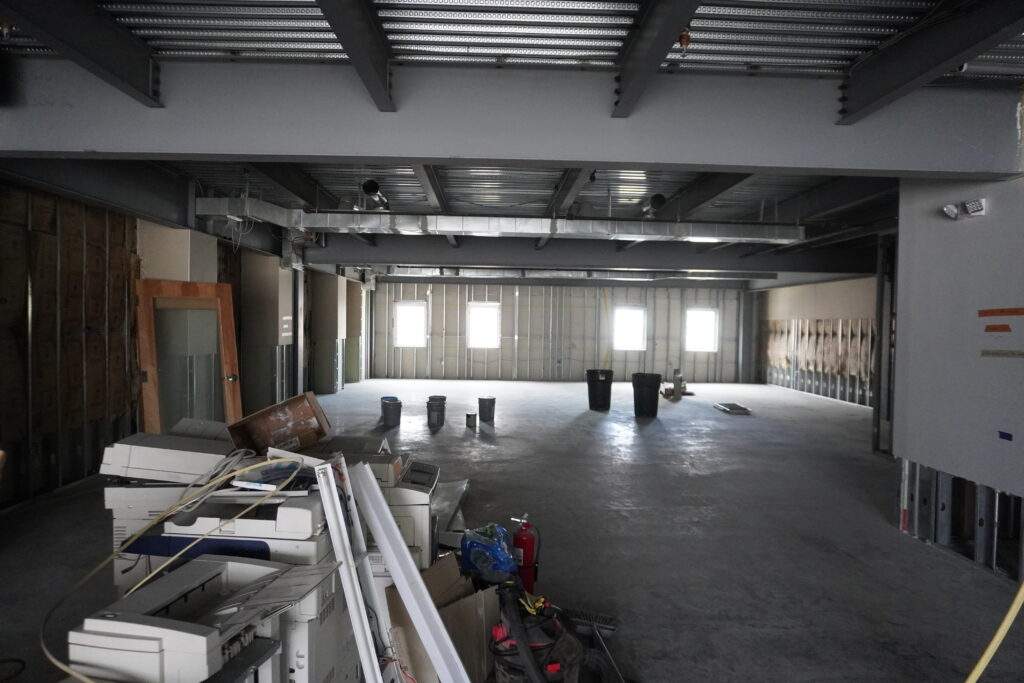
Selective demolition may include portions of drywall, insulation, ceiling material, flooring, or other affected components. Not everything needs to come out. The conditions of the property determine what stays and what goes.
Air Movement and Dehumidification Work Together
Structural drying commonly relies on air movement and dehumidification.
Air movers increase airflow across wet surfaces and help moisture leave affected materials. Dehumidifiers then remove moisture from the surrounding air. Together, the equipment creates conditions that support continued drying.
This process is not as simple as putting a few fans in a room.
Equipment placement, airflow, temperature, humidity, building materials, and the size of the affected space can all influence drying conditions. Commercial buildings may also require additional planning because employees, tenants, equipment, inventory, or business operations remain nearby.
Moisture Levels Need to Be Monitored
Drying equipment usually does not run for a predetermined number of hours and disappear.
Moisture conditions should be checked throughout the process. Restoration professionals can monitor affected materials and compare readings over time to determine whether drying is progressing.
That ongoing evaluation can also reveal areas that are not responding as expected. A concealed wall cavity, flooring assembly, or insulation pocket may remain wet even while surrounding surfaces improve.
Looks dry is not the same as dry.
What Happens After Structural Drying?
Once the affected areas reach appropriate moisture conditions, the restoration process can move forward. If materials were removed during mitigation, the commercial property may then require reconstruction.
That can include drywall, ceilings, flooring, paint, doors, millwork, offices, customer areas, and other finished portions of the building.
3Rivers General Contracting provides commercial water mitigation, structural drying, restoration, and reconstruction throughout Greater Pittsburgh. If water has affected your commercial property, call 412-643-4581 or visit 3riverscm.com. Proper drying creates the foundation for everything that comes next.