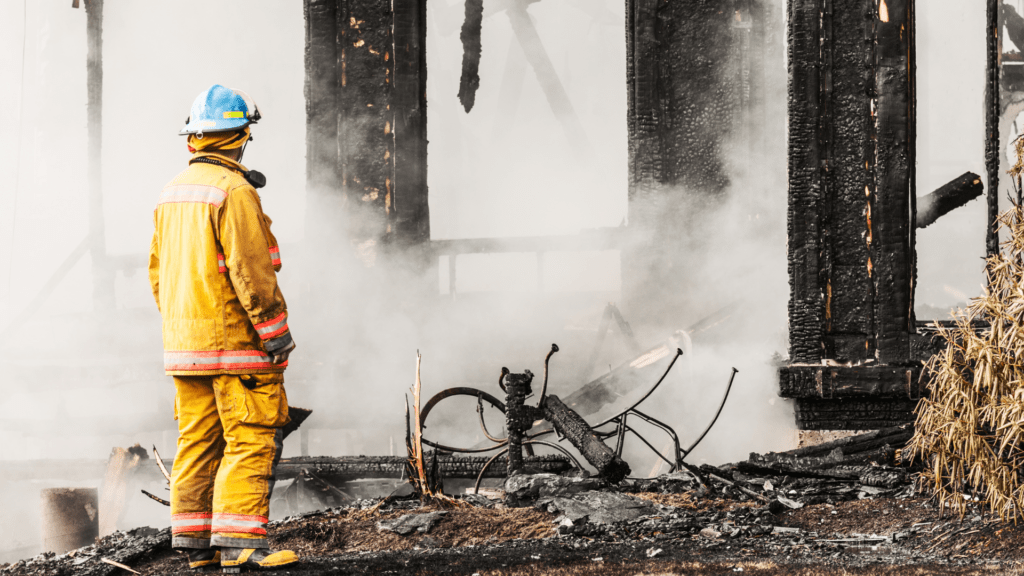
Fire gets the attention. Water often creates the second problem.
After a commercial fire, property owners usually expect to deal with burned materials, smoke, soot, and odor. What can come as a surprise is the amount of water left behind after the fire is extinguished. Fire hoses can release large volumes of water, sprinkler systems may discharge throughout affected areas, and damaged plumbing can create additional leaks. In many Pittsburgh commercial buildings, fire damage and water damage become part of the same restoration project.
Fire Suppression Can Introduce Significant Water
Firefighters use water because controlling the fire comes first. That necessary response can leave floors, walls, ceilings, insulation, offices, tenant spaces, and storage areas saturated. Automatic sprinkler systems can also activate during a fire and continue discharging until the system is shut down.
Water does not always stay near the original fire. It can move through floor penetrations, stairwells, wall cavities, ceiling assemblies, and lower levels. In a multi-story commercial building, the water may affect areas that never saw flames or smoke.
That is why a fire restoration contractor may need to begin water mitigation almost immediately after safe access is established.
Water Damage Can Continue After the Fire Is Out
The fire may be extinguished, but moisture can keep spreading.
Water can soak into drywall, ceiling tile, insulation, flooring systems, wood, and other porous building materials. It may also collect beneath finished floors or inside concealed cavities. If those areas are not evaluated and dried properly, the damage can become more extensive over time.
Commercial water mitigation after a fire may include water extraction, air movement, dehumidification, moisture monitoring, and selective demolition. Some materials can dry in place. Others may be too damaged to remain.
The important point is simple: the absence of standing water does not mean the building is dry.
Fire and Water Damage Need to Be Evaluated Together
A commercial fire loss can create overlapping damage conditions. One wall may have heat damage on one side and water saturation on the other. A ceiling may contain smoke residue while also holding moisture from sprinkler discharge. Flooring may appear intact while water has traveled underneath it.
Treating each problem in isolation can make restoration more complicated.
A coordinated evaluation should consider direct fire damage, smoke migration, soot residue, suppression water, affected building materials, and the construction that may be required after mitigation. In older Pittsburgh properties, previous renovations and concealed construction can make that evaluation even more important.
Drying Is Not the End of the Project
Once water mitigation is complete, the building may still need substantial repairs.
Drywall may have been removed. Ceiling systems may be open. Flooring may need replacement. Offices, corridors, customer areas, or tenant spaces may remain unusable. Reconstruction then becomes the next stage of the recovery process.
3Rivers General Contracting provides commercial fire damage restoration, water mitigation, and reconstruction throughout Greater Pittsburgh. Eligible projects can move from fire and water mitigation into the commercial construction required to rebuild affected areas.
If your commercial property has experienced a fire, sprinkler discharge, or fire suppression water damage, contact 3Rivers General Contracting at 412-643-4581 or visit 3riverscm.com. The flames may be gone, but getting the building back to normal takes a broader recovery plan.