A burst pipe can turn an ordinary workday into a building emergency in minutes. Water may start above a ceiling, behind a wall, inside a mechanical room, or in an area nobody notices right away. By the time someone finds it, the damage may already extend into flooring, drywall, offices, stockrooms, tenant spaces, or lower levels. For commercial property owners in Pittsburgh, the first objective is not to start repairs immediately. It is to stop the water, protect people, and understand how far the loss has traveled.
Stop the Water and Secure the Area
The first step is to shut off the water source when it can be done safely. Building maintenance, a plumber, or another qualified professional may need to isolate the affected line. Employees, tenants, customers, and visitors should stay away from areas with standing water, sagging ceilings, electrical concerns, or visible structural damage. Once the area is reasonably safe, document the conditions with photos and video. Record where the water started, which rooms are affected, and whether water has moved to another floor. That early documentation can become useful during the restoration and insurance process.
Commercial Water Mitigation Starts Next
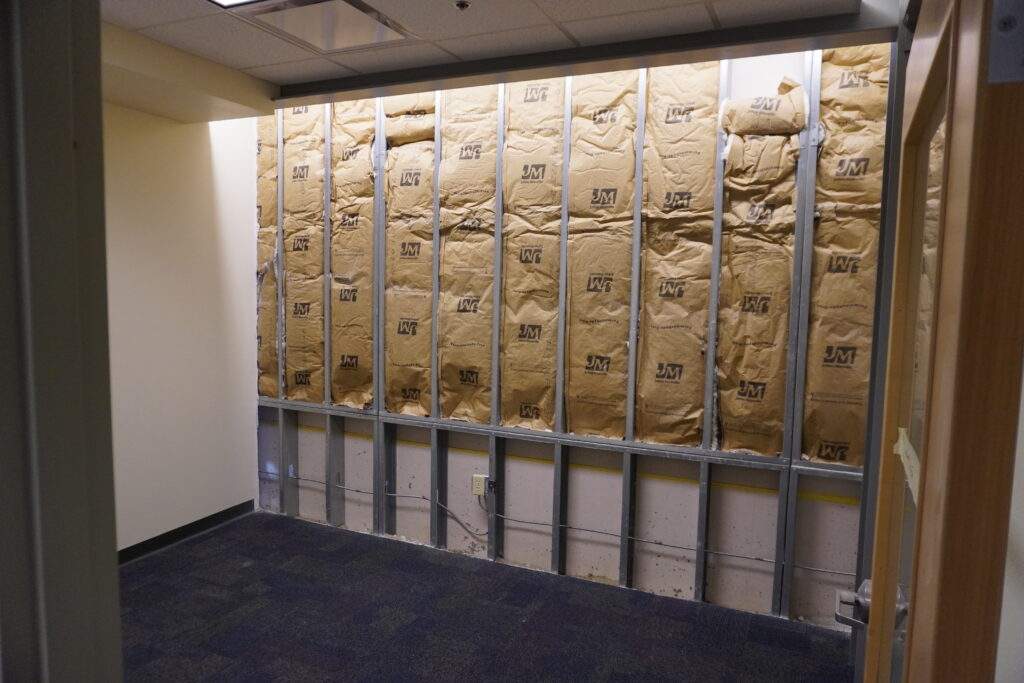
After the source is controlled, commercial water mitigation should begin quickly. Standing water may need to be extracted, but the visible puddle is only part of the problem. Moisture can move beneath flooring, behind walls, into insulation, and through ceiling assemblies. Restoration professionals may use air movers, dehumidifiers, moisture meters, and other drying equipment to reduce moisture levels and evaluate affected materials. Some wet drywall, ceiling tile, flooring, or insulation may need to be selectively removed so the building can dry correctly. In older Pittsburgh commercial buildings, water can also follow some strange routes through previous renovations and layered construction.
The Building May Not Be Ready to Use
A commercial building can be dry and still be far from normal. Offices may have open walls. Flooring may be removed. Ceiling systems may be incomplete. Tenant spaces may be closed, and employees may need temporary work areas. Property managers should determine which portions of the building can remain operational and which need to stay isolated during mitigation. In some cases, the loss can be contained to one area. In others, especially when water moves through multiple floors, broader closures may be necessary.
Reconstruction Comes After Drying
Once the affected areas reach appropriate dry conditions, the project can move into reconstruction. This stage may include new drywall, ceilings, flooring, paint, doors, trim, cabinetry, millwork, and other commercial finishes. Larger losses can require substantial rebuilding across several rooms or floors. This is where a contractor with both restoration and commercial construction experience can be especially valuable, because the job does not end when the drying equipment leaves.
3Rivers General Contracting provides commercial water mitigation, restoration, and reconstruction throughout Greater Pittsburgh. If a burst pipe has damaged your commercial property, contact 3Rivers at 412-643-4581 or visit 3riverscm.com. The faster the loss is controlled, the clearer the path becomes from damaged building to usable commercial space.