Water damage rarely announces itself politely. A pipe breaks above a ceiling tile, a sprinkler discharges, or a roof leak starts feeding water into a commercial space while nobody is watching. In a Pittsburgh commercial building, the first few decisions can determine whether the problem stays manageable or spreads into walls, flooring, offices, stockrooms, and lower floors. The safest move is to treat active water as both a property problem and an operational problem. Protect people first, then protect the building. From there, move quickly.
Stop the Water Source and Protect People
The first step is to identify the source of the water and stop it when that can be done safely. Building staff may need to shut off a supply line, contact a plumber, or isolate a leaking fixture, but no one should enter an area with obvious electrical, structural, or ceiling hazards. Keep employees, tenants, customers, and vendors away from affected rooms until conditions are understood. Take clear photos and video before moving damaged materials when possible, because that documentation may help establish the condition of the property. Note which rooms are affected and whether water has traveled to another floor. It sounds simple, but during a messy loss, basic documentation gets forgotten fast.
Start Commercial Water Mitigation Quickly
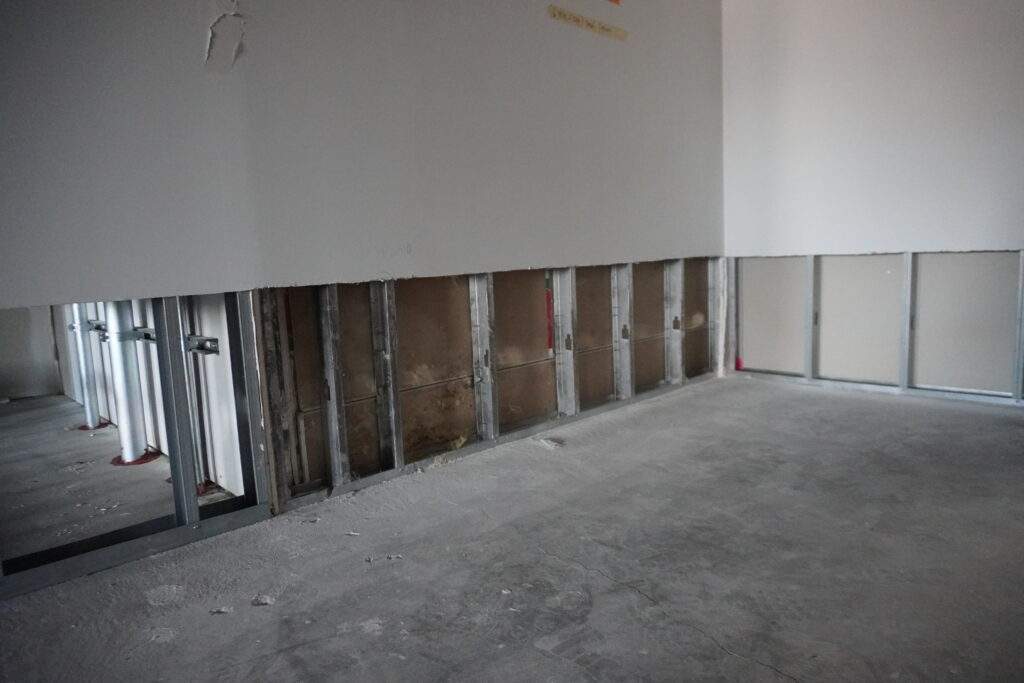
Next comes commercial water mitigation. Standing water should be removed, but visible water is only part of the story because moisture can move beneath flooring, behind baseboards, into drywall, and through ceiling assemblies. A qualified restoration contractor can evaluate affected materials, establish drying conditions, and determine whether selective demolition is necessary. Depending on the loss, mitigation may involve water extraction, air movement, dehumidification, moisture monitoring, and removal of saturated materials that cannot remain. Avoid the temptation to point a few fans at the floor and call it good. Around Pittsburgh, where older commercial buildings and layers of previous construction are common, water can find strange pathways.
Protect Business Operations and Document the Loss
Property managers should also decide what can remain operational and what needs to close temporarily. A small localized loss may allow the rest of the business to continue working, while a multi-floor event may require broader restrictions. Keep access routes clear, separate occupants from drying equipment and active work zones, and communicate with tenants or employees about which areas are off limits. If inventory, equipment, records, or other business assets are at risk, move them only when it can be done safely. Do not throw away damaged building materials or contents before they are documented if an insurance claim may be involved. One bad morning can turn into a much longer interruption if the recovery plan gets improvised hour by hour.
Plan for Reconstruction, Not Just Drying
The final step is to think beyond drying. Commercial water mitigation stops additional damage, but it does not automatically restore the building. Once affected areas are dry, the property may still need new drywall, ceilings, flooring, paint, doors, millwork, or other construction. 3Rivers General Contracting provides commercial water damage restoration and reconstruction throughout Greater Pittsburgh, helping property owners move from mitigation into the repairs required to make the space functional again. If a burst pipe, roof leak, plumbing failure, sprinkler discharge, or other water event has affected your commercial property, contact 3Rivers at 412-643-4581 or visit 3riverscm.com. The goal is straightforward: stop the loss, dry the building, and get the property back to work.