Not every damaged condition is visible on day one.
After water, fire, smoke, or storm damage, contractors can evaluate what they see, document affected areas, and develop an initial reconstruction scope. Then demolition begins. Flooring comes up, drywall comes down, ceiling assemblies open, and suddenly the building reveals something nobody could reasonably see during the first inspection. For Pittsburgh commercial property owners, hidden damage does not automatically mean something went wrong with the original assessment. Sometimes you simply cannot know what is behind a finished surface until the construction exposes it.
Why Hidden Damage Appears During Reconstruction
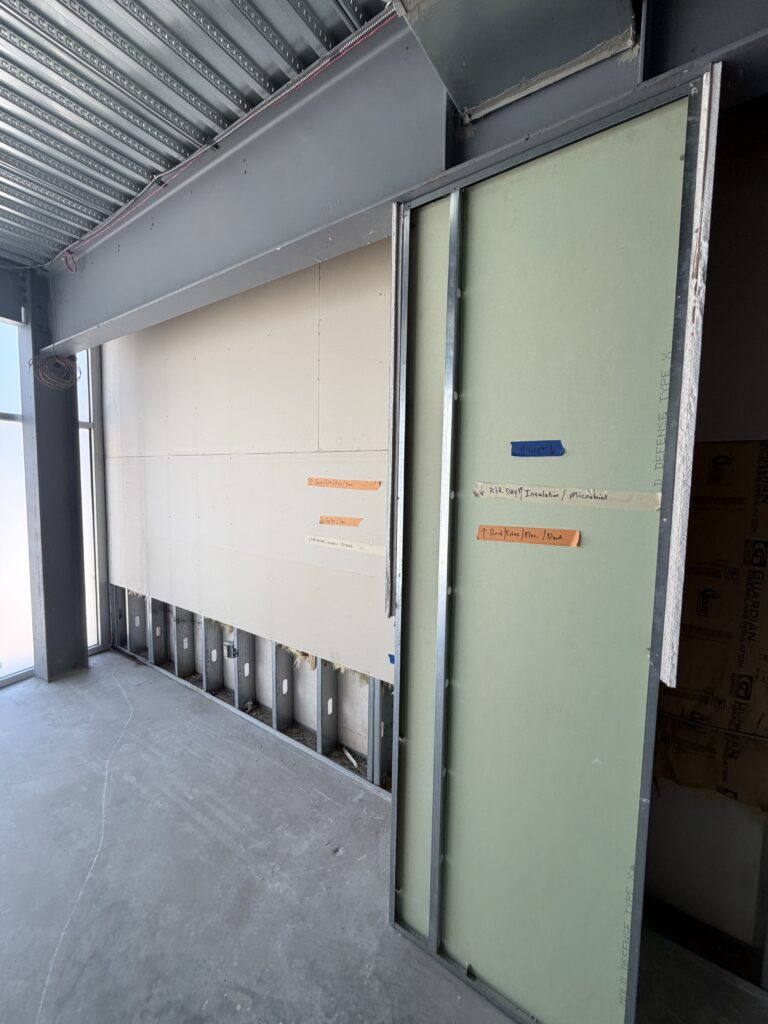
Commercial buildings contain layers. Drywall covers framing, flooring conceals substrates, ceilings hide utilities, and previous renovations can place newer materials directly over older construction. Water can move through those concealed assemblies without leaving an obvious trail on the finished surface. Smoke and soot can also migrate into cavities, while fire or heat can affect components beyond the visible burn area.
Older Pittsburgh commercial properties can make this particularly interesting. A building may have been renovated several times over decades, with walls moved, ceilings lowered, flooring layered, and mechanical systems rerouted. Once demolition begins, conditions can look quite different from what drawings or surface inspections suggested.
Buildings keep secrets. Eventually, somebody opens the wall.
The Contractor Should Document the New Condition
When additional damage appears, the next step should be documentation.
The contractor may take photographs, measurements, notes, and other records that show what was discovered and where it exists. The team can then determine whether the newly visible condition affects the planned reconstruction scope. If more drywall, insulation, flooring, framing, or another building component needs attention, the contractor can describe that work and communicate the change to the appropriate project stakeholders.
Clear documentation helps answer a basic question: Why is the project different now than it appeared before demolition?
That matters for owners, property managers, tenants, and insurance-related projects alike.
Hidden Damage Can Change Cost and Schedule
Additional work usually means additional resources.
More damaged materials may need to be removed. Drying could continue in a newly exposed area. Replacement materials may need to be ordered, and another trade could become necessary. Depending on the discovery, permits, inspections, engineering input, or other project requirements may also change.
The schedule can move too. That does not mean every hidden condition creates a major delay, but property owners should expect reconstruction timelines to remain somewhat flexible until concealed areas are fully understood.
An accurate update is better than pretending the original schedule still applies.
What Happens When Insurance Is Involved?
If an insurance claim is part of the restoration project, the contractor can document newly discovered construction conditions and provide updated scope or cost information when appropriate.
The contractor does not determine whether the additional work is covered. Insurance carriers, adjusters, policyholders, and other insurance professionals handle coverage decisions, policy interpretation, and claim payments.
3Rivers’ role is the construction side: identify what was uncovered, document it clearly, explain how it affects the repair scope, and complete authorized reconstruction work.
Commercial Reconstruction Requires Adaptability
Property damage reconstruction is different from building in a completely open, predictable space. Existing conditions matter, and some of them remain invisible until work begins.
3Rivers General Contracting provides commercial restoration and reconstruction throughout Greater Pittsburgh after eligible water, fire, smoke, soot, and storm losses. Our commercial construction experience helps us address the surprises that can appear between demolition and the finished rebuild.
If additional damage has been discovered during your commercial restoration project, or if mitigation is complete and you need a contractor for reconstruction, call 3Rivers General Contracting at 412-643-4581 or visit 3riverscm.com.
The scope may change. The objective does not: understand the building, communicate what was found, and rebuild the property correctly.