Commercial property damage creates two processes at the same time.
The building needs attention, and the insurance claim needs documentation. After water, fire, smoke, or storm damage, property owners may suddenly be coordinating restoration contractors, adjusters, tenants, employees, property managers, and other stakeholders. Each person has a different role. For Pittsburgh businesses, understanding how commercial property insurance restoration typically works can make the recovery process easier to manage and help keep the construction side moving.
The Property Should Be Stabilized First
When damage is active, protecting the property comes before long-term repair planning. A burst pipe may require water extraction and structural drying. Storm damage may require temporary protection from additional water intrusion. A fire loss can involve suppression water, smoke, soot, debris, and damaged building materials.
This initial work is generally called mitigation. Its purpose is to reduce additional damage and stabilize affected areas.
Property owners should also document conditions when it is safe to do so. Photos, video, affected-room notes, and records of emergency work can help establish what the building looked like before cleanup changes the scene.
The Insurance Carrier Evaluates the Claim
The property owner or policyholder typically reports the loss to the insurance carrier. An adjuster or other insurance professional may then evaluate the claim, request documentation, inspect the property, and review the applicable policy.
This distinction is important: a restoration contractor does not decide whether damage is covered. The contractor also does not determine deductibles, interpret policy language, or guarantee insurance payment.
Those matters belong to the policyholder and insurance professionals.
The contractor focuses on the physical building and the work required to mitigate, restore, and reconstruct it.
The Contractor Develops the Construction Scope
Once conditions are understood, the contractor can document damaged building areas and develop an appropriate construction scope.
That documentation may include photographs, measurements, material quantities, descriptions of affected components, estimates, and proposed repair methods. The scope may address drywall, ceilings, flooring, doors, paint, millwork, offices, tenant spaces, or other damaged areas.
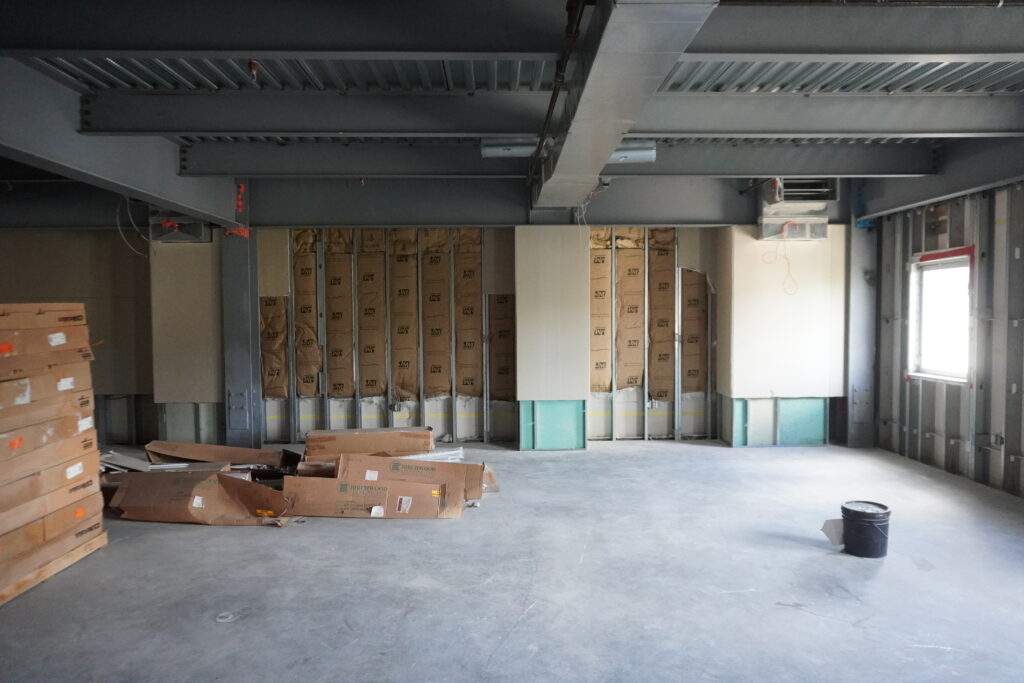
Sometimes the full picture does not appear until demolition begins. Water can hide beneath flooring. Smoke can migrate into adjoining spaces. Removing damaged drywall may reveal additional affected materials behind it.
Buildings have a way of keeping a few surprises behind the walls.
When new construction conditions appear, the contractor can document what was discovered and communicate the information to the appropriate project stakeholders.
Mitigation and Reconstruction Are Different Stages
One common source of confusion is the gap between emergency mitigation and permanent repairs.
A water mitigation contractor might successfully dry the building, but the property could still have missing drywall, exposed ceilings, removed flooring, and unusable rooms. A fire restoration project may eliminate damaged materials and soot while leaving extensive construction behind.
That is when reconstruction begins.
Commercial reconstruction physically restores the affected portions of the building. Depending on the loss, it may involve framing, drywall, flooring, ceilings, painting, doors, trim, millwork, restrooms, offices, and other finishes.
Insurance Restoration Is Still a Construction Project
Once the immediate emergency passes, a commercial insurance restoration project becomes a construction project with schedules, materials, trades, inspections, building access, and operational considerations.
3Rivers General Contracting provides commercial mitigation, restoration, and reconstruction throughout Greater Pittsburgh for eligible water, fire, smoke, soot, and storm losses. Our commercial construction capabilities allow eligible projects to continue beyond the emergency stage and into the work required to restore the property.
If your commercial building has experienced property damage and insurance is involved, call 3Rivers General Contracting at 412-643-4581 or visit 3riverscm.com.
The insurance process addresses the claim. The restoration process gets the building back to work.